


About The Speaker

Peter Senter
Senior Editor on Molecular Cancer Therapeutics | Affiliate Prof. of Bioengineering, Washington Uni.
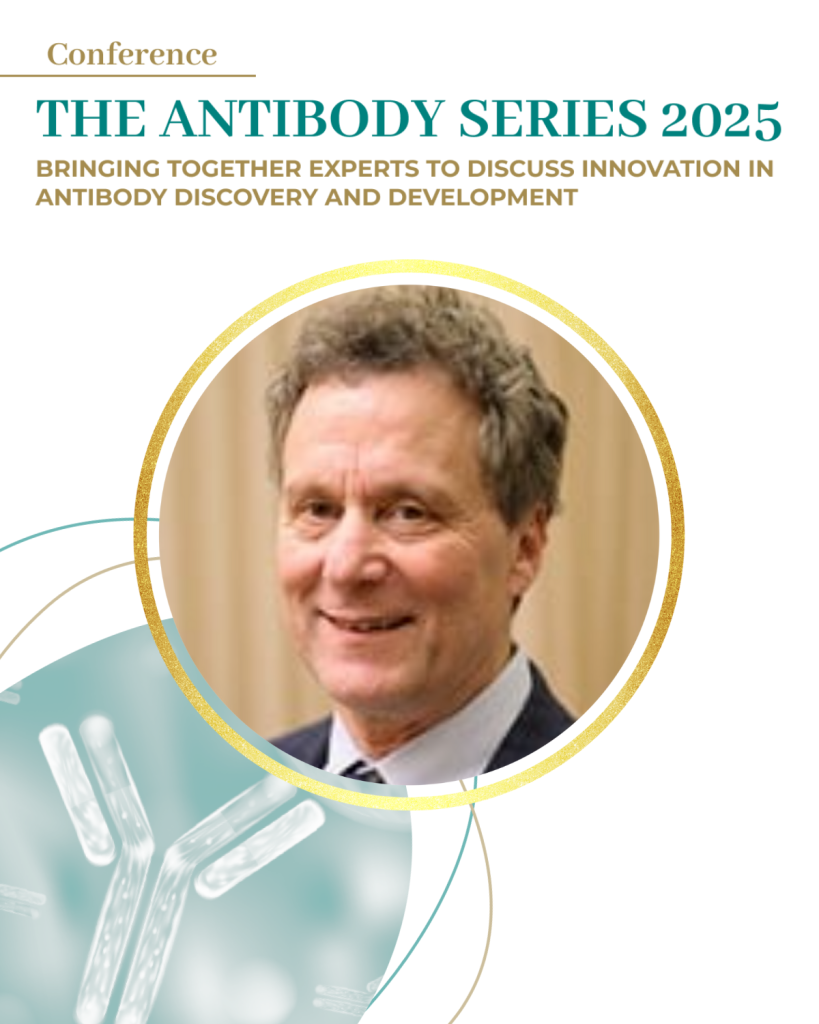
Peter Senter
Peter Senter joined Seagen in 1998 where he built and led the chemistry group that carrieed out research in cancer drug design, antibody-drug conjugate technologies for cancer therapy, and protein chemistry. Several of the molecules generated in Dr. Senter’s lab have entered clinical trials, and four have been approved: Adcetris, Padcev and Tivdak from Seagen, and Etopophos from BMS. Dr. Senter has authored more than 160 scientific publications and holds many issued patents. He received an A.B. in Biochemistry from the University of California, Berkeley, a Ph.D. in Chemistry from the University of Illinois, and did postdoctoral research at the Max Planck Institute of Experimental Medicine in Göttingen, Germany. He serves as Senior Editor on Molecular Cancer Therapeutics and is an Affiliate Professor of Bioengineering at the University of Washington.
The Past, Present, and Future of Antibody Drug Conjugates
In recent years, a great deal of progress has been made using antibody drug conjugates (ADCs) for the treatment of cancer. Currently, there are 13 FDA approved such drugs that are used in a wide array of malignancies, and many more are in late-stage clinical development. The field emerged with ADCs such as brentuximab vedotin that highlighted the impact that antigen specificity, drug potency, linker stability and physiochemical properties played on efficacy and tolerability. Since then, the technology has advanced significantly with new antigen targets, drug payloads, linker technologies, and delivery agents that have resulted in highly active ADCs with pronounced clinical impact. The field is set to expand even further, with new insights gained towards improving targeted delivery, utilizing bispecific antibody technologies, and establishing novel co-conjugation and ADC combinations, with the goal of improving targeted delivery and antitumor activity yet further. This presentation will provide an overview of how this very promising area of drug delivery has evolved and what lies ahead.