


About The Speaker

Anna Huhn
PostDoc, Department of Paediatrics, University of Oxford, UK
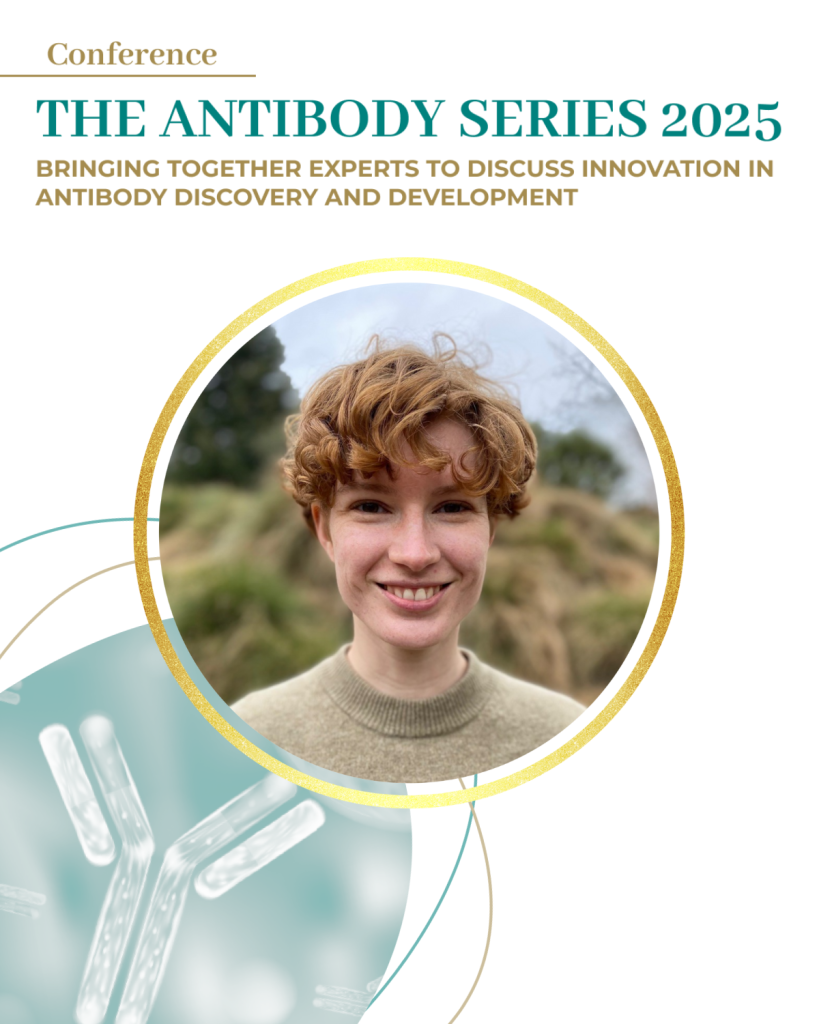
Anna Huhn
I obtained my PhD in 2024 under the supervision of Omer Dushek at the University of Oxford. During my PhD, I worked on new methods for quantifying the interaction between antigen receptors with their respective antigens, specifically focusing on T cell receptors binding peptide-MHC complexes and interactions of antibodies with viral antigens. In 2025, I started my postdoc in the Simon Draper lab in Oxford, where I am characterising the binding mechanism of antibodies against malaria vaccine antigens. My aim is to understand the mechanism underlying antibody inhibition of malaria replication, ultimately to inform the design of improved vaccine candidates.
A novel particle-based model captures the stochastic and spatial process of bivalent binding and predicts antibody function
Antibody have two identical antigen binding site, allowing them to bind two antigens simultaneously. This bivalent binding significantly enhances binding strength and potency compared to monovalent (single-arm) binding.
Despite their importance, we still do not fully understand what binding properties determine antibody function. A key challenge has been the lack of mathematical models to analyse bivalent binding mechanistically. To address this, we developed a particle-based model that captures the spatial and stochastic dynamics of bivalent binding, allowing us to quantify antibody binding properties using Surface Plasmon Resonance (SPR) data.
Our model provides both standard monovalent affinity/kinetics and new bivalent parameters, including an antibody’s “molecular reach”—the maximum separation between antigens that supports simultaneous binding. Analysing antibodies binding the SARS-CoV-2 spike protein, we found that monovalent binding alone poorly predicts neutralisation, while molecular reach shows a striking correlation with potency. Thus, antibodies with similar affinities and epitopes can differ in potency due to variations in reach, highlighting reach as a key, previously unmeasured factor in antibody potency.
Our model also extends to multivalent antigens and antibodies, making it a versatile tool for understanding antibody function and optimising therapeutic antibodies and vaccine designs to elicit effective immune responses.